
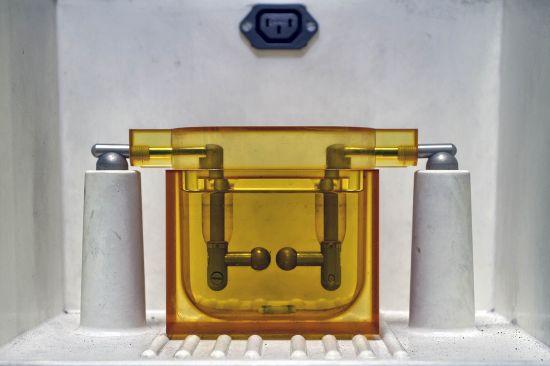
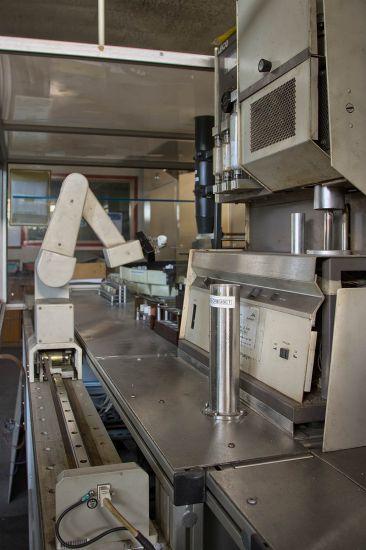
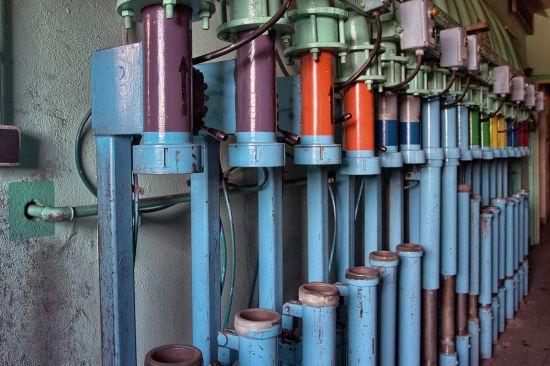
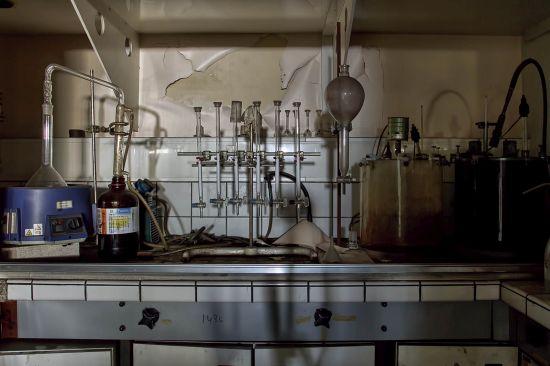
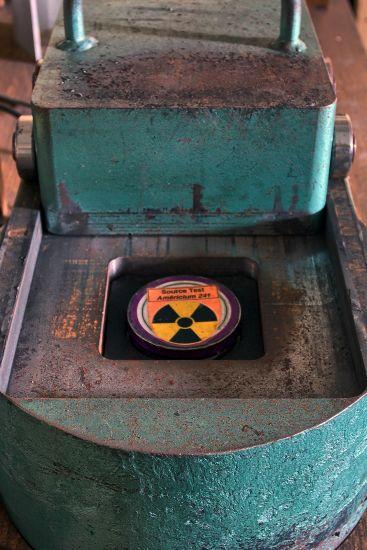
Although photographing this location took quite some doing, I am also aware that if four people who only take pictures and break nothing to get there can reach the radioactive material, so can people with genuinely bad intentions. And that is without even mentioning the trophy hunters, who are simply committing theft, often in aggravated circumstances. Something similar once happened in the Brazilian city of Goiânia, where squatters took radioactive material from a hospital. Within a month, four people had died from the high radiation dose; because of the radiation, they were buried in lead coffins encased in concrete. Almost 30 people were heavily contaminated and 250 less severely. This later became known as the Goiânia incident.
In this blog I take the opportunity to say a little more about my hobby: what it involves, a few unwritten rules and the things you may encounter at locations. Urbex, short for Urban Exploration, is really no more and no less than discovering abandoned places that are, or have been, used by people. Some go so far as to include exploring places still in use. That is called infiltration. I do not go that far: with urbex I limit myself to places that were once used by people but no longer are. Abandoned places that have only recently fallen out of use and are still hidden from the wider public often hold a great attraction for those who pursue this hobby. Personally, I have a clear preference for heavy industry, religious buildings and old castles. The first appeals to me because of the sheer scale of the complexes; the latter two because of the beauty of the buildings and their distinctive architecture. I also have a soft spot for hospitals, including psychiatric hospitals, mainly because of the atmosphere you sometimes find there.
I always try to record my visits and explorations as faithfully as possible. The photographs in the urbex section of my website primarily tell the story of the building and, ideally, its users too. You will not find HDR photographs with extreme, atmospheric processing in my urbex section, because those do not show a location as it really is: they simply produce attractive pictures. Everyone makes that choice for themselves. My urbex is mainly about showing a building or location as I saw it during my visit. Elsewhere on my website I have written a more detailed article about urbex and the legislation you inevitably encounter when pursuing this addictive hobby.
For a long time, searching for and finding locations was an important part of this hobby. Now, however, it seems that many people aim only to photograph as many locations as possible in the shortest possible time. The result is that places are overrun almost immediately and, worse still, are damaged or have belongings taken away. I am not pointing only at so-called urbexers, but I know there are people who pay little attention to the golden rule: “take nothing but pictures and leave nothing but footprints”.
Let me be clear: these blog posts are not intended to encourage people to take up this hobby. So many people now call themselves urbexers that I have scaled it back and do more ordinary photography again than urbex photography. With these posts I want to give people an idea of how such photographs come about and what it sometimes takes to make them. Most locations are not in your own town, after all, and they can be difficult to photograph because of the light, accessibility and other external influences.
Over the years I have been active in urbex, I have come across quite a few things. But a piece of radioactive material that could be used to make a dirty bomb really took the prize. Apart from a great many personal belongings and pieces of jewellery, abandoned homes often contain substantial amounts of money. You also sometimes encounter weapons and ammunition in abandoned houses in Belgium. Large sums of money or valuable possessions can remain in business premises too. Sometimes that follows bankruptcy or the sudden death of a resident or owner. Still, it is bizarre that nobody looks after them and everything is simply left behind. In the past I also visited houses where I felt decidedly uncomfortable, and I am no longer interested in such places. In the houses I mean, the entire contents had been left behind, including family photographs, photo albums and personal and intimate belongings. After visiting two such houses, I had had enough: I felt more like a voyeur than someone sincerely interested in abandoned places. Since then I have passed those locations by and confined myself to the buildings I do find interesting. I also know from personal experience that when a family renounces an inheritance, the community essentially arranges only the burial or cremation. Possessions remain untouched, even if they are very valuable. Even a furniture shop with its entire stock has been rotting away for years, although its contents could have provided many families in need with good furniture.
Possessions left at locations are a difficult subject. On the one hand, you do not want them to fall into the wrong hands; on the other, I am myself on the edge of the law and sometimes step over it by entering where access is prohibited. Going to the local police with the story, “I was just in that abandoned house and saw a gun with ammunition lying there”, is not exactly straightforward either… In my imagination I can already see the baton being laid on the desk and hear a former Belgian gendarme immediately asking, “Well then, what were you doing there?” In Germany it is even more difficult. Its law on trespass refers to “das befriedete Besitztum eines anderen”, another person’s enclosed property, and when the police learn of a crime, they are obliged to initiate prosecution. They do not have the discretionary power to prosecute that exists in, for example, the Netherlands and Belgium.
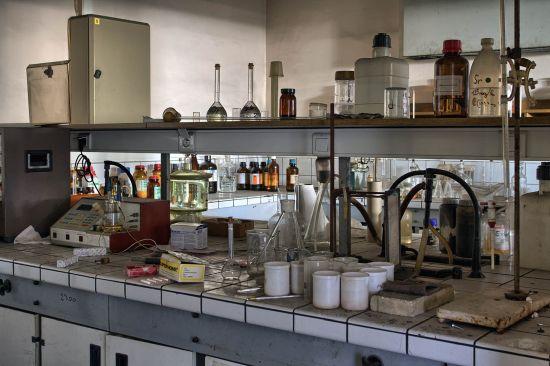
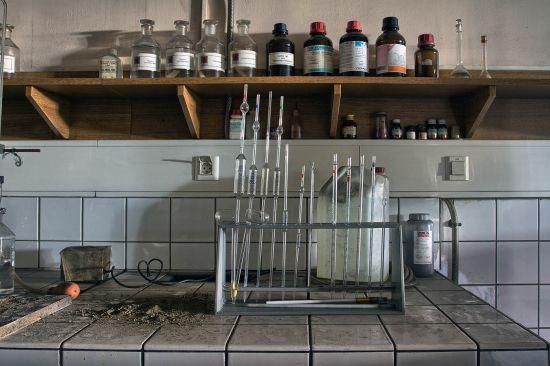
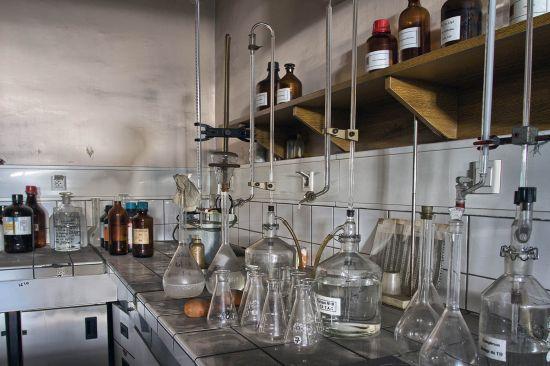
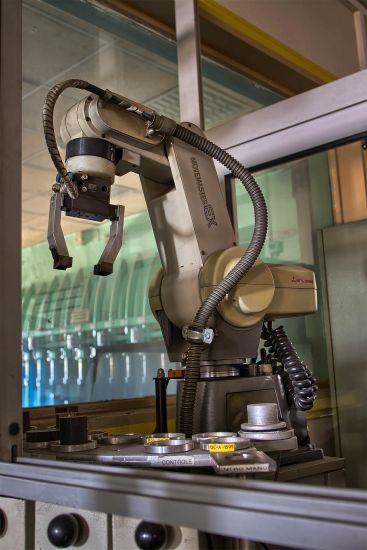
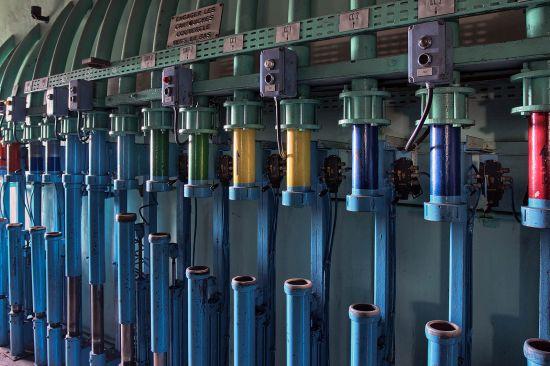
After visiting the location shown below, I also spent a long time considering reporting the radioactive substance we had found. But where do you report that, and what consequences might it have for you? I have since understood that the laboratory still has not been cleared, but I have also seen few, if any, further photographs of it. Apparently, those who visited realised that it was something other than an ordinary laboratory and that this was not a location to casually reveal to others…


Wat een bijzonder verhaal.
En wat een mooie overzichtelijke website.
Dank je, Ingrid.
Mooi Molise is ook een mooie website.
Inmiddels is de website helemaal vernieuwd. De oude website was gemaakt met Joomla. Deze is met WordPress gemaakt, dus het was nogal wat werk alles om te zetten.