
Background:
When the steel industry in Europe really began to take shape in the late eighteenth and early nineteenth centuries, blast furnaces and steelworks sprang up in areas rich in coal. Given that, roughly speaking, ten kilos of coal are needed to smelt one kilo of iron ore, it is hardly surprising that they chose those areas.
Globalising markets and economic pressures forced many of these complexes to close, and, so far, only the blast furnaces in IJmuiden and Germany’s Ruhr region seemed profitable. In Belgium, on the coast as well as around Charleroi and Liège, most complexes had to shut their doors.
This complex had been on my list for a while, but I had not got around to visiting. With places like this, the main thing is to get there before the major copper thieves and the tourists.
It is a while since this visit was on the programme, but I had set aside a whole day. Just as other people spend a day at the Efteling amusement park, I found my entertainment wandering around a complex like this and letting my mind drift.
The exploration
The main thing here was to get in unseen, because once inside, security would have a job finding you. This time I went with another female enthusiast and, as mentioned, we set aside a day for HFB, as the complex was known.
To avoid problems and attract as little attention as possible, I have always favoured walking onto a site as though you own the place. But we knew a large steel fence prevented us from simply walking in. There were other possibilities, but they had their risks too.
A quick look around showed plenty of ways onto the site, but brambles and NATO razor wire lay behind them. A lot of trouble, though certainly not impossible. The gatehouse looked deserted, so we cautiously approached the main entrance. Just as we arrived, the barrier that sealed off the site opened. We took that as an invitation and walked in. For a moment we heard a French voice shouting through the crackling intercom, too distorted to understand, but unfortunately I do not speak French. Barely a minute after we entered, we heard a van coming up behind us, and my heart was in my mouth: security? Two men in overalls in the white van looked at us but did nothing else.
As soon as the van disappeared from sight, we quickly headed for another part of the site, where we wanted to begin.
After just under half an hour through undergrowth, over railway tracks and up stairs, we reached the blast furnace:
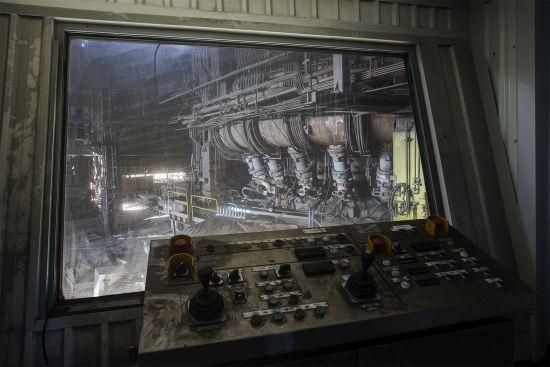
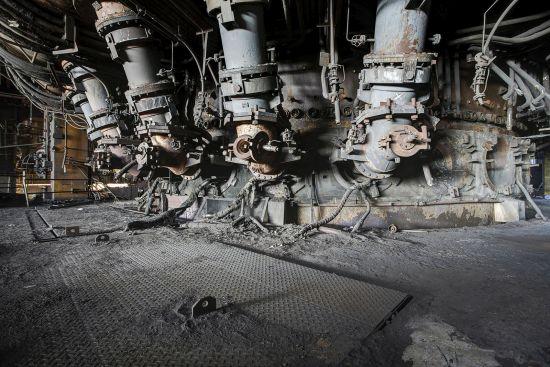
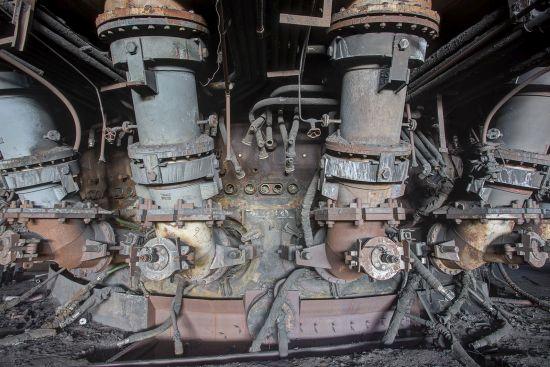
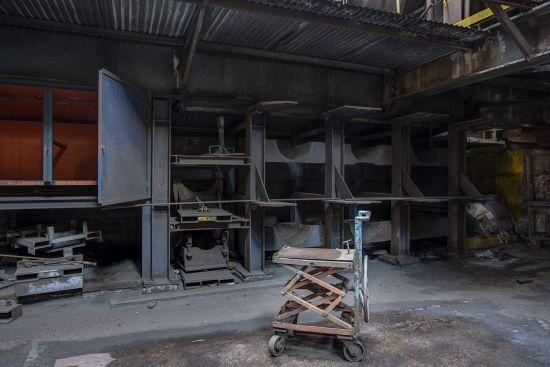
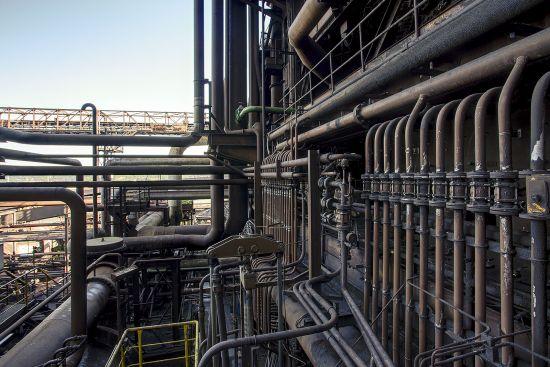
What an enormous machine, and what hell it must have been to work here, especially in summer. From a distance I had had no idea how open this part of the complex was. Take a few steps and you look out over the site; another minute and it feels as though you are in an ordinary workshop in an average factory.
Fortunately, hardly anything had yet been damaged and everything was still where it belonged. A few months later, sadly, that was very different.
We did not spend much time here, at least not enough to climb up and photograph the blast furnace from above. After inspecting the injectors thoroughly, it was time to look at the furnace where the liquid steel used to flow out.
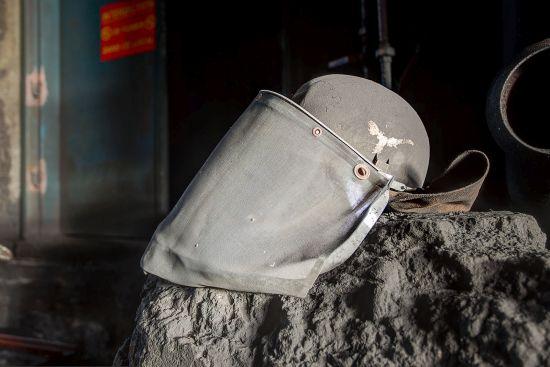
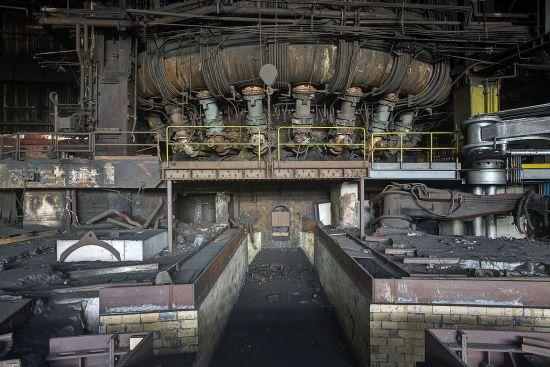
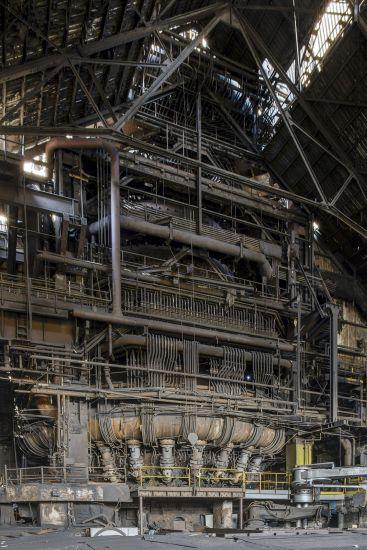
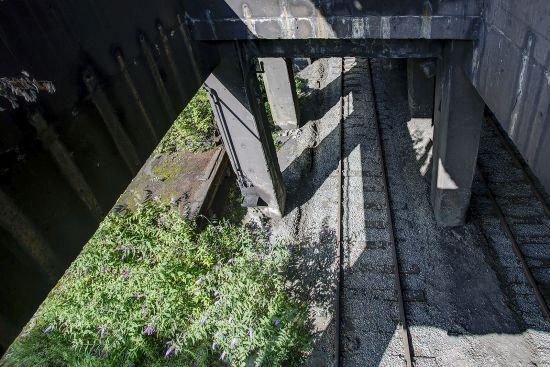

From this point, the whole blast furnace is visible, or at least the part indoors; another almost equally large part projects high above the roof. Although it was hard to leave, it was time to move on. There was still so much to see, and the fine weather and plentiful light were ideal for photographing the site.
Crossing the grounds, we ended up in a building that had clearly already been visited by copper thieves. Stripped cables lay everywhere, and some rooms had been used to burn the last plastic from them. Soot everywhere, and naturally the PAH alarm going off in the back of my mind.
Still, time to see what was here: the building was certainly large enough to contain interesting things.
Inside, it turned out to be a section where acids were made and stored; the warning signs certainly suggested there was nasty stuff around. The small workshop in the building proved the nicest part, but on a visit like this I also photograph the less interesting things.
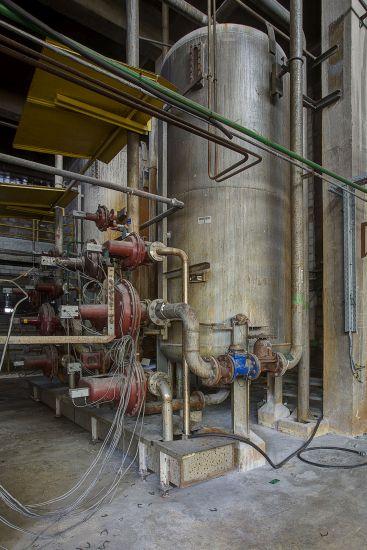

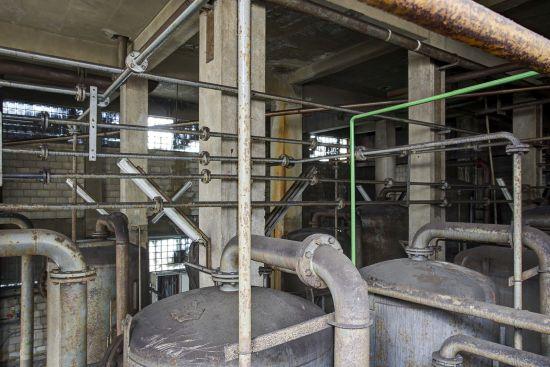


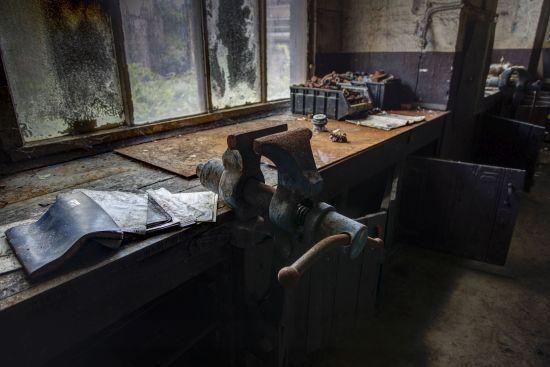
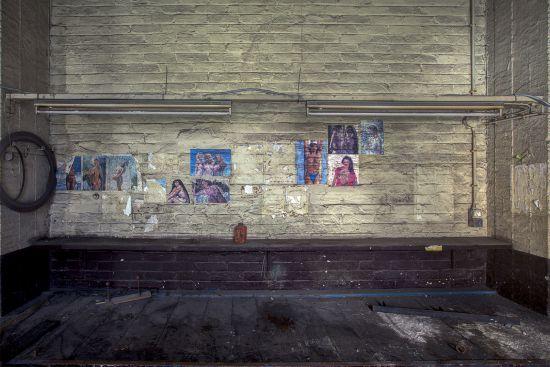
Time to move on, because every blast furnace has a power station, and this one would surely be no different. Abandoned power stations are always popular places because of their imposing character.
We picked our way back outside through stripped cables and other rubbish, looking for the power station.
We were lucky. Although copper thieves had been here too, the power station still seemed relatively unscathed. The turbines, at least, were still completely intact, as was the control room. Unfortunately, the latter had also been affected by soot from cables burnt elsewhere in the building. The soot marks clearly showed that large quantities of cable had been burnt here.
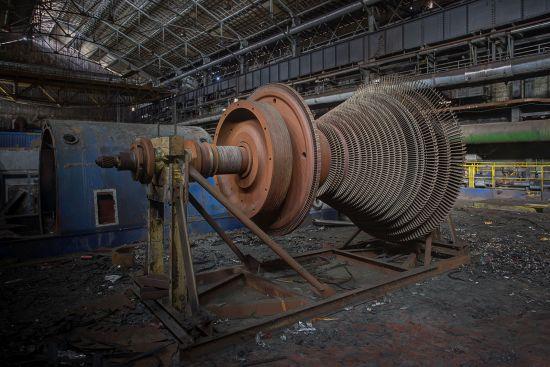
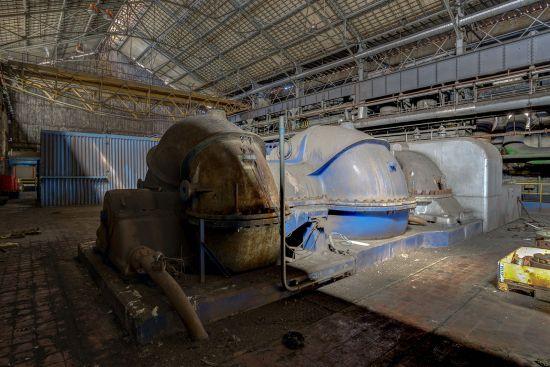
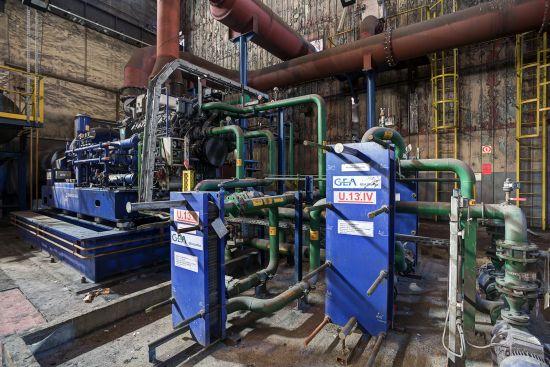
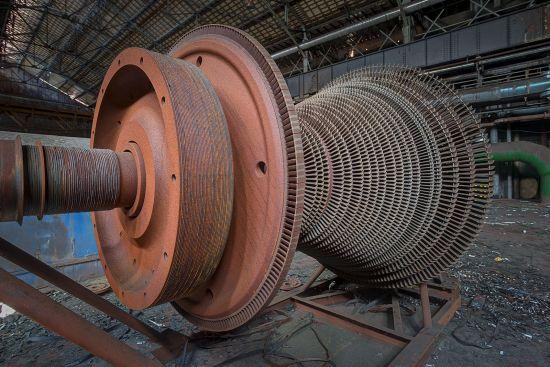


As we had already spent several hours on the site and had also seen someone from a security company walking outside, we decided we should be satisfied with the photographs we had taken. On the way back to the main entrance, we used the fine weather to take a few more pictures outdoors and briefly in the section containing the sintering furnace.
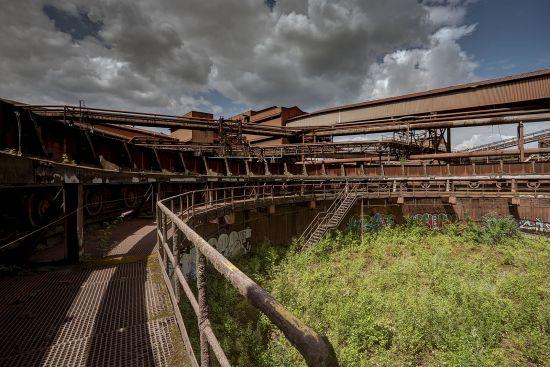
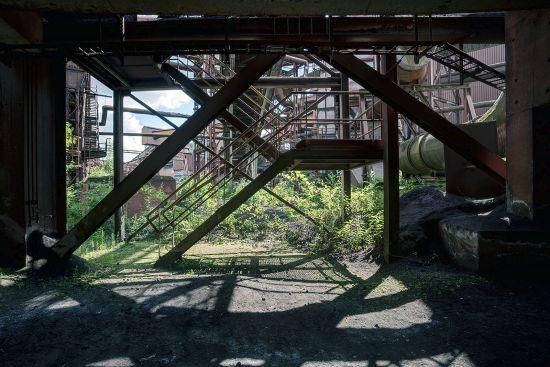
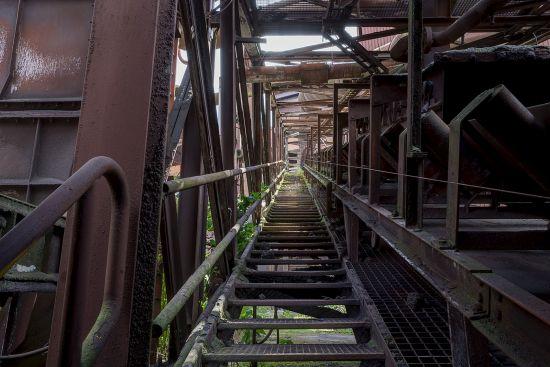
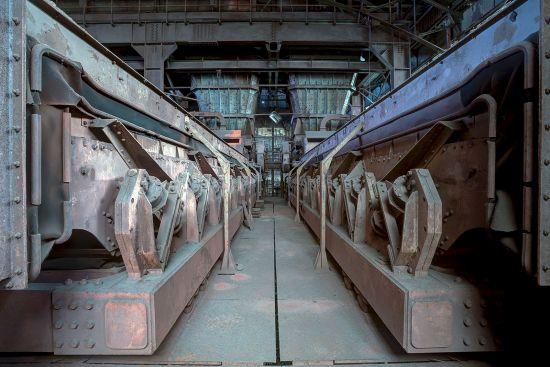

Since our luck could not last forever, we decided to call it a day and head back to the main entrance. We were fortunate: the gate was still open and only the barrier remained closed. Contrary to what we had first thought, there was fortunately enough space between the barrier and the fence for us to get out again.
The photographs are available in high resolution at HFB urbex.
Comments