
When this theatre was built, Liège was still a lively industrial city where ships carrying coal and iron ore docked. Much of the population consisted of workers employed in the steel industry and its supplying and processing businesses. It was a rough city with a heart of gold, lovely little cafés and unhealthy air. Sundays traditionally brought the Liège market, which animal rights organisations were already protesting against then, but would be up in arms about today. That was Liège then. Today it looks very different, with poverty prevailing after the entire hot phase of steel production came to a halt.
After it became known that major companies were closing their doors, fierce protests broke out in the city. The management of one large company was even held hostage in an attempt to force shareholders to change their minds. Despite all the protests, businesses closed, and people with a chance of finding a new or different job moved away. Considerable poverty still affects the people who remained, and the city struggles with addiction and everything that comes with it.
The city is doing its utmost to overcome that misery, and slowly glimmers of hope are beginning to shine again.
It has been a busy day, with several locations on our photography programme. When I park in a street where my car is the only one younger than, let’s say, fifteen years, and young people immediately look over at it, I can only hope all its windows will still be there when we return. We get out, take our backpacks and tripods from the car, and disappear from view as quickly as possible. The tall gate that should close off the grounds is ajar, so we can simply walk in. We choose a spot out of sight of the road and take in the building for a moment. It looks as though others have already visited. The doors are firmly barricaded and most windows are covered with plywood.
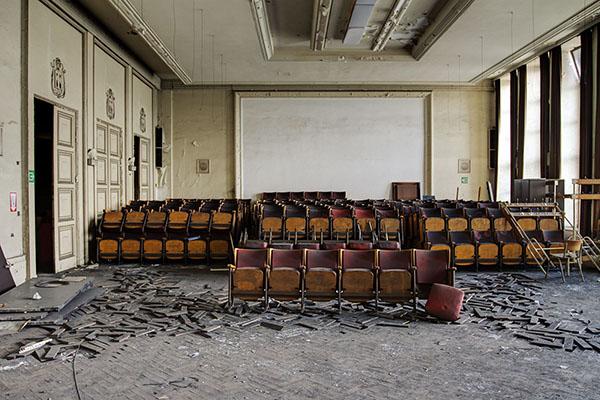
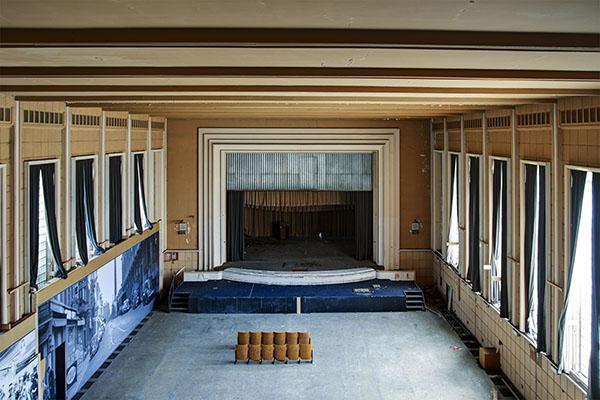
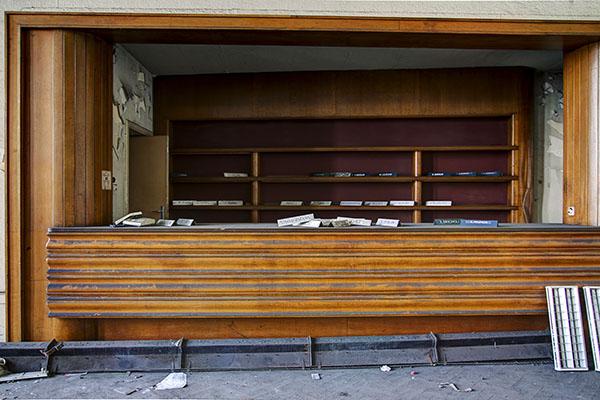
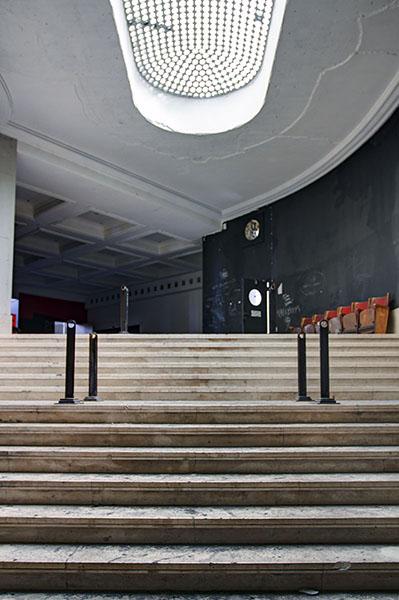
Beneath the building, a garage door stands wide open. The garage does not seem to connect to the theatre, but we try it anyway. We put on our head torches, and soon find ourselves ankle-deep in thick, sticky sludge, until we discover a plank walkway leading to a staircase. Miraculously, the door is simply open, and before long we are in the theatre. The traces clearly show that homeless people have used it as a place to sleep, but nothing suggests anyone is currently inside. We quickly take out our cameras and spread out through the building. It turns out to be larger than we first thought, and jokers who came before us have hidden the much-sought-after nameplate bearing G. Jeusette a little too well.


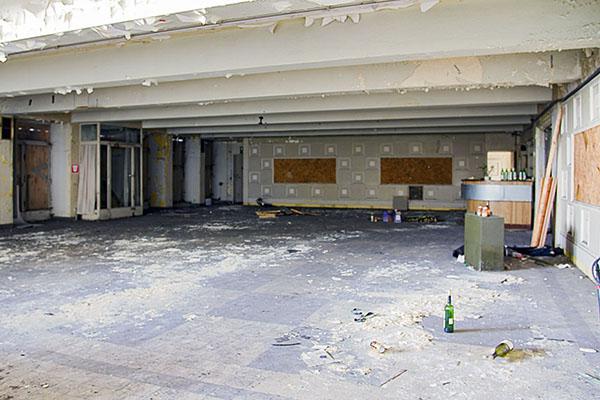

Miraculously, my car turned out to be untouched when we left the theatre.
Years later, Stromae filmed the video for Quand c’est? there. The theatre quickly became hugely popular to photograph again, but by then a great deal had been destroyed.
The theatre has since fallen to the wrecking ball. And is Mr or Ms G. Jeusette still alive?
Comments